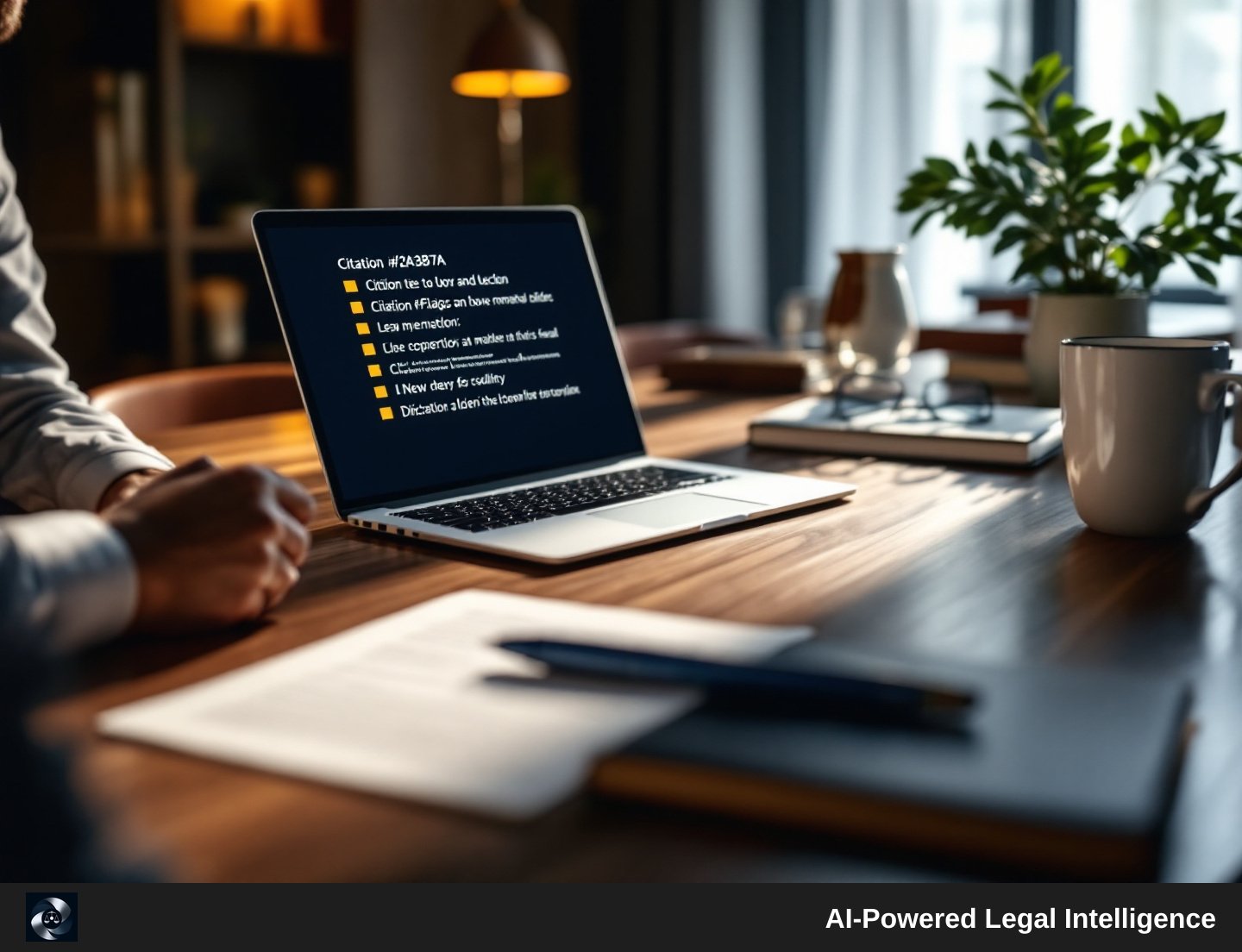
There is a particular kind of frustration that every trial attorney knows. A witness says something on the stand — something that contradicts what they swore to in a deposition six months ago — and you feel it in your gut. You know the impeachment is there. But finding the exact page, the exact paragraph, the exact words in a stack of transcripts while the witness is still seated and the jury is watching? That is where cases slip away.
Real-time transcript analysis changes that equation entirely. When AI can surface contradictions between live testimony and prior sworn statements in seconds, the attorney's job shifts from frantic page-flipping to strategic questioning. The technology does not replace attorney judgment — it amplifies it, putting the right information in front of counsel at exactly the right moment.
For small personal injury and employment law firms, where lean teams carry heavy caseloads, this kind of capability is not a luxury. It is a competitive leveler.
Why Inconsistencies Are So Hard to Catch in Real Time
Depositions and trial testimony generate enormous volumes of text. A single deposition transcript might run two hundred pages. A complex personal injury case — one involving multiple treating physicians, an IME, recorded statements, and prior proceedings — can produce thousands of pages of sworn testimony before a single witness takes the stand at trial.
Attorneys prepare obsessively. They tab transcripts, highlight key passages, build cross-examination outlines. But live testimony is unpredictable. A witness who answered questions one way in a deposition may shift their account under the pressure of trial, introduce new details, or quietly walk back prior admissions. The inconsistency may not land in the section of the transcript you tabbed. It may appear in a different witness's statement, or in a recorded call, or in a medical record that the witness is now characterizing differently than the treating physician did.
Human working memory has limits. Even the most prepared attorney cannot hold thousands of transcript pages in active recall while simultaneously listening, evaluating credibility, managing objections, and planning follow-up questions. This is precisely where automated analysis earns its place at the trial table.
The Compounding Problem in Personal Injury Cases
In personal injury litigation, the inconsistency problem compounds quickly. Medical records are central evidence, and the interplay between what a plaintiff says about their symptoms, what treating physicians documented, and what an IME physician concludes creates multiple layers of potential contradiction. An automated medical record review for PI law cases can map every symptom complaint, every treatment note, and every physician's functional assessment into a single searchable chronology — so when a witness testifies that they reported neck pain from the very first day, the system can instantly surface whether that claim matches the initial emergency room notes or contradicts them.
Without that layer of organization, even a well-prepared attorney may miss a subtle inconsistency between a witness's live account and a buried treatment note from month three of care. With it, the contradiction surfaces the moment the witness's words diverge from the record.
How Real-Time Analysis Actually Works at the Deposition Table
The practical mechanics matter. Real-time transcript analysis is not about an AI system generating questions for the attorney — it is about giving the attorney a live feed of intelligence drawn from everything the case file contains.
ProvaLens's Live Cross Copilot operates exactly this way during depositions. As the witness testifies, it surfaces admissions, contradictions, and suggested follow-up lines in real time, drawing on the full case file the platform has already analyzed. The attorney sees the relevant prior statement — with its exact citation — without leaving the flow of the examination.
At trial, ProvaLens's Live Trial Mode extends this capability to witness testimony, checking live statements against prior deposition transcripts and surfacing impeachment questions the moment a contradiction appears. The attorney does not have to remember which deposition page contained the prior inconsistent statement. The system finds it.
Note: Live Trial Mode works from the deposition transcripts and case documents already indexed in the platform. Attorneys should consult their courtroom workflow to determine how testimony text is made available to the system during trial proceedings.
What This Looks Like in Practice
The following is a hypothetical illustrative scenario and does not represent a real case or client.
Imagine a plaintiff in a slip-and-fall case who testifies at trial that she told the store manager about the wet floor immediately after the fall. Defense counsel is cross-examining. The plaintiff's deposition, taken eight months earlier, contained a passage in which she acknowledged she was not sure whether she spoke to a manager or a stock clerk. The trial testimony subtly shifts her account toward certainty.
With Live Trial Mode active and the deposition transcript already indexed in the platform, the moment the plaintiff's trial testimony diverges from her deposition language, the system flags the prior inconsistent statement — page and paragraph — and suggests an impeachment line. Defense counsel does not have to flip through a tabbed transcript. They have the citation in front of them within seconds.
This is the difference between catching the inconsistency and letting it pass because the moment was too fast.
The Role of Automated Medical Record Review in Building the Baseline
Real-time analysis is only as good as the baseline it works from. For personal injury attorneys, that baseline is the medical record chronology — and building it manually is one of the most time-intensive tasks in case preparation.
Automated medical record review for PI law cases transforms this preparation phase. Instead of a paralegal spending days organizing records from multiple providers, flagging gaps in treatment, and cross-referencing physician notes against the plaintiff's own account, the platform ingests the entire medical file and generates a structured chronology automatically. Every date of service, every diagnosis, every treatment note, every physician's functional assessment is indexed and searchable.
When that chronology is the foundation for real-time analysis, the system can do something a human reviewer cannot: hold the entire medical narrative in memory simultaneously and compare any live statement against any point in that narrative instantly. If a witness testifies that their doctor cleared them to return to full-duty work, the system can surface whether the treating physician's records actually support that characterization — or whether the records show a more qualified opinion.
For small firms competing against larger defense teams with dedicated litigation support staff, this kind of automated preparation capability is a genuine equalizer.
Connecting Preparation to Real-Time Performance
The firms that get the most from real-time analysis are the ones that invest in thorough upfront document processing. When the entire case file — medical records, depositions, recorded statements, correspondence, surveillance transcripts — has been analyzed and indexed before the deposition or trial begins, the real-time layer has everything it needs to perform.
This means treating document ingestion as a strategic priority, not an administrative afterthought. It means uploading records as they arrive, not the night before the deposition. It means using the platform's contradiction detection and timeline features during case development, so that by the time the witness sits down, the attorney already knows where the vulnerabilities in the testimony are likely to appear.
Practical Tips for Integrating Real-Time Analysis Into Your Workflow
Adopting real-time transcript analysis requires some intentional workflow adjustment. The technology is powerful, but its value is maximized when attorneys and paralegals build habits around it.
Build the case file early and keep it current. Every document that enters the matter — medical records, correspondence, prior testimony, recorded statements — should be uploaded and processed as it arrives. The real-time system draws on what has been indexed. Gaps in the file are gaps in the intelligence feed.
Use the platform's contradiction detection during preparation. Before a deposition, run the case file through contradiction detection to identify inconsistencies that already exist in the documents. This gives you a map of the terrain before the witness sits down, so you know where to probe.
Let the AI surface citations; let the attorney decide strategy. Real-time analysis is a tool for the attorney, not a replacement for attorney judgment. The system surfaces what is in the record. The attorney decides whether and how to use it. Train yourself to glance at the feed without losing the thread of the examination.
Debrief after every deposition. After the deposition, review what the system flagged and what you used. Over time, this builds intuition about how to integrate the real-time feed into your examination style.
For complex cases, consider Expert Services. ProvaLens's done-for-you Expert Services deliver a complete AI-powered case analysis including interactive timelines, medical chronologies, and strategic observations prepared by the ProvaLens team. Pricing is available directly from ProvaLens and should be confirmed at the time of engagement. This per-case cost is a genuine out-of-pocket case expense that a firm may bill to the client as a case cost, at cost and with client disclosure and informed consent, much like an expert witness fee or eDiscovery cost. For high-value or high-complexity matters, having that analysis in place before the first deposition can make the real-time layer significantly more effective.
The Competitive Advantage Small Firms Can No Longer Afford to Ignore
Large defense firms have long had the advantage of dedicated litigation support teams — paralegals who do nothing but organize transcripts, analysts who build chronologies, associates who prepare cross-examination binders. Small plaintiff-side and employment law firms have historically competed with preparation, instinct, and deep case knowledge.
Real-time transcript analysis does not eliminate the need for preparation, instinct, or case knowledge. It makes all three more powerful by removing the bottleneck that has always existed between what an attorney knows and what they can access in the moment the witness is speaking.
The firms that integrate this capability thoughtfully — building complete case files, using contradiction detection during preparation, and deploying real-time analysis at depositions and trial — will find that they are catching things they used to miss, following up on inconsistencies they used to let pass, and entering the courtroom with a level of document command that was previously the exclusive province of much larger teams.
If you are evaluating how AI fits into your firm's litigation practice, the place to start is with the tools that perform at the moments that matter most. Start your free ProvaLens trial and see what real-time case intelligence looks like in practice.