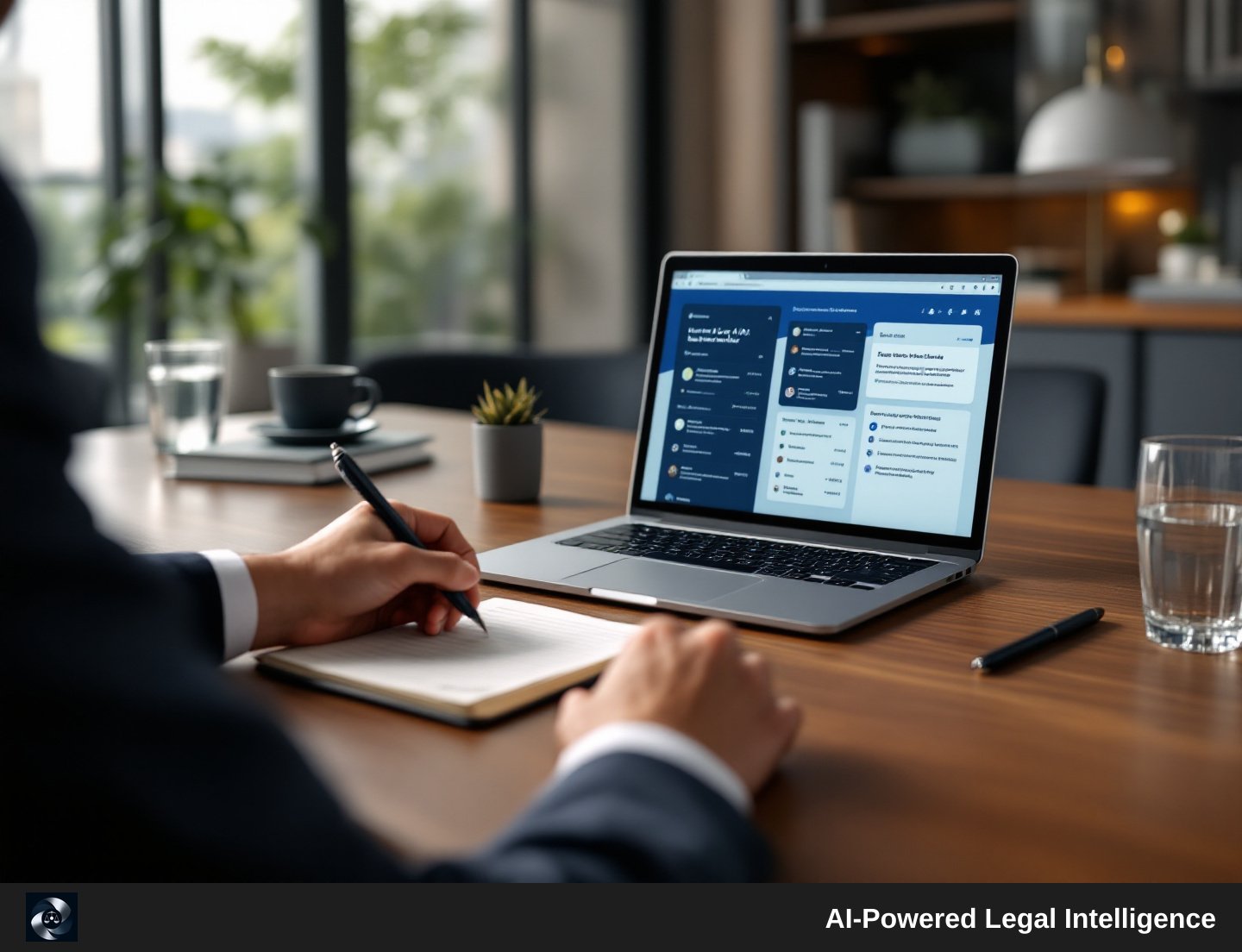
Deposing an expert witness is one of the highest-stakes moments in personal injury and employment litigation. You have one opportunity to pin down opinions, expose methodological weaknesses, and surface contradictions between what the expert says today and what they wrote in their report, their prior testimony, or the underlying medical and employment records. Miss a thread, and opposing counsel will pull it at trial — on their terms, not yours.
For small firms of two to ten attorneys, the challenge is structural. Large defense shops routinely bring a second chair whose only job is to cross-reference testimony against the case file in real time. Plaintiffs' firms rarely have that luxury. A solo attorney managing exhibits, keeping pace with testimony, and simultaneously hunting for impeachment material across hundreds of pages of records is doing three cognitively demanding jobs at once — and something almost always falls through the cracks.
This is precisely the problem that AI-powered deposition support is designed to solve. When you compare AI legal tech for expert witness research, the most meaningful distinction is not which tool has the most features — it is which tool is actually grounded in your case file, able to surface a contradiction in real time, and able to point you to the exact page and paragraph where the inconsistency lives. That is the difference between a tool that impresses in a demo and one that earns its keep in a conference room.
Why Expert Witness Depositions Demand a Different Kind of Preparation
Expert witness depositions differ from lay witness depositions in a fundamental way: the witness is professionally trained to be consistent, articulate, and difficult to pin down. An independent medical examiner (IME) who has testified dozens of times knows how to hedge language, qualify opinions, and avoid the kind of flat contradiction that makes for a clean impeachment at trial.
That professional polish makes preparation even more critical. Before a single question is asked, a well-prepared attorney should have:
- A complete chronological picture of the expert's opinions as stated in their report
- A side-by-side comparison of those opinions against the treating physician's records and the client's documented symptom history
- A list of every factual premise the expert relies on — and the specific record or absence of record that challenges each one
- Prior testimony or published materials where the expert has taken a different position
Building that foundation manually is time-intensive. For a complex PI case with voluminous medical records spanning multiple providers, assembling a deposition prep package can consume a paralegal's entire week. When you compare AI legal tech for expert witness research against traditional manual workflows, the efficiency gap becomes stark — not because AI replaces the attorney's judgment, but because it compresses the document-processing work that precedes that judgment.
From Recording to Transcript: The Foundation of Real-Time Insight
Before AI can surface anything useful during a deposition, it needs a reliable, searchable record of what is being said. That sounds obvious, but the gap between a raw audio recording and a usable transcript has historically been a post-deposition problem — something you deal with days or weeks later when the official transcript arrives.
ProvaLens addresses this at the source. The platform transcribes audio and video depositions and recorded statements into searchable, speaker-labeled transcripts. That means testimony is not locked inside a recording file waiting for a court reporter's turnaround time. It becomes a searchable document that the platform can cross-reference against the rest of the case file.
For expert witness depositions specifically, this matters in two ways. First, it creates an immediate record that can be reviewed and annotated while the session is still fresh. Second, it feeds the platform's ability to flag admissions and conflicts — not just against prior written materials, but against what the witness said earlier in the same session.
To illustrate with a hypothetical scenario: an IME doctor testifies in the morning that the claimant's rotator cuff tear is entirely degenerative and unrelated to the accident. Two hours later, under questioning about mechanism of injury, the same doctor acknowledges that acute trauma can accelerate degenerative changes. A human attorney managing exhibits and note-taking simultaneously may not immediately register the tension between those two statements. An AI system monitoring the transcript can flag it in real time.
Live Cross Copilot: What Real-Time AI Support Actually Looks Like
ProvaLens's Live Cross Copilot is built for exactly this scenario. During a deposition, it monitors testimony as it unfolds and flags admissions, conflicts, and follow-up areas in real time — giving the deposing attorney a live analytical layer that previously required a second chair.
For expert witness depositions, the practical applications include:
Contradiction detection against the case file. When an expert makes a factual claim — about the claimant's pre-existing conditions, their treatment history, or the mechanism of injury — the Copilot can cross-reference that claim against the medical records already in the platform. If the expert states that the claimant had no documented prior treatment for lower back pain and the records show three physical therapy visits from two years earlier, that conflict surfaces immediately, cited to the exact document and page.
Admission flagging. Expert witnesses sometimes make concessions that are more significant than they appear in the moment. A statement like "I would agree that a fall from that height could cause the type of injury described" may seem minor in isolation but becomes powerful when juxtaposed with the expert's ultimate opinion. The Copilot flags these moments so the attorney can decide whether to press immediately or circle back.
Follow-up flagging. The Copilot flags follow-up areas identified from testimony and the underlying records — not as a scripted list of questions to read verbatim, but as real-time alerts that a potentially productive line of inquiry may be worth exploring. The attorney retains full control over whether and how to pursue it.
When attorneys compare AI legal tech for expert witness research, this real-time capability is often the feature that most clearly separates purpose-built legal AI from general-purpose tools. A consumer chatbot cannot monitor a live deposition. A document intelligence platform purpose-built for litigation can.
Deposition Prep Before the Session: Building Your Expert Witness Outline with AI
The Copilot works best when the case file is already organized and the platform has had time to process and cross-reference the documents. That means deposition prep begins well before the session itself.
Here is a practical workflow for using AI to build an expert witness deposition outline:
Step 1: Upload and organize the expert's materials. Load the expert's report, curriculum vitae, any prior testimony transcripts, and published articles or materials into the platform. ProvaLens automatically classifies, dates, and organizes documents by type, so these materials are immediately searchable alongside the rest of the case file.
Step 2: Run a contradiction analysis. Ask the platform to identify potential conflicts between the expert's report and the treating physician's records. ProvaLens flags possible inconsistencies and contradictions across documents, cited to the page — giving you a prioritized list of areas where the expert's opinions are most vulnerable.
Step 3: Build a medical chronology. For PI cases, the medical chronology is the backbone of expert witness cross-examination. ProvaLens generates itemized medical chronologies from all uploaded records, making it straightforward to identify the specific treatment dates, diagnoses, and clinical notes that contradict or complicate the expert's narrative.
Step 4: Draft your outline. With the contradiction analysis and chronology in hand, the attorney can build a deposition outline organized around the expert's weakest premises. The AI chat feature — which returns answers cited to exact page and paragraph — lets you quickly verify whether a specific record supports a specific line of questioning before you commit it to your outline.
Step 5: Activate the Copilot. On the day of the deposition, with the case file fully loaded and organized, the Live Cross Copilot has everything it needs to provide meaningful real-time support.
This workflow does not replace the attorney's expertise or judgment. It eliminates the document-processing bottleneck that prevents that expertise from being fully deployed in the room.
Employment Law Expert Witnesses: A Distinct but Parallel Challenge
Much of the discussion around AI deposition support focuses on personal injury cases, where medical experts are the most common deposition targets. But employment law cases present their own expert witness challenges — and AI support is equally valuable there.
In wage and hour litigation, opposing counsel may retain a damages expert who has constructed a damages model based on time records and pay stubs. In discrimination or retaliation cases, a human resources expert may opine on whether the employer's policies and practices met industry standards. In wrongful termination matters, an expert on performance management may testify about whether the documented grounds for termination were legitimate.
In each of these contexts, the expert's opinions are only as strong as the underlying documents they relied on — and those documents are already in your case file. ProvaLens can cross-reference the expert's stated factual premises against the emails, HR records, and pay stubs that the platform has already processed and organized. When you compare AI legal tech for expert witness research in an employment context, the ability to surface document-level contradictions is just as powerful as it is in a medical records context — the document types are different, but the analytical task is the same.
As an illustrative hypothetical example: consider a firm handling a retaliation claim where the defense expert opines that the termination decision was made before the plaintiff filed an internal complaint. Because the platform has already processed and chronologically organized the HR emails and performance review documents uploaded to the matter, the attorney can use the case file during deposition prep to identify any record that contradicts that timeline — a forwarded email, a review dated after the complaint, a calendar entry. The Live Cross Copilot monitors live testimony and flags admissions and conflicts against the case file as the expert testifies; the attorney can then pursue those threads in real time.
What to Look for When You Compare AI Legal Tech for Expert Witness Research
Not all legal AI tools are built the same way, and the differences matter most when the stakes are highest. If you are evaluating platforms for deposition support specifically, here are the capabilities that separate genuinely useful tools from impressive demos:
Grounding in your case file. A tool that generates answers from general training data is not useful in a deposition. You need a platform that reads your documents and returns answers cited to the exact page and paragraph. This is the foundational requirement — everything else depends on it.
Real-time monitoring. Deposition support that only works after the session is over is just transcript review. Meaningful AI support requires the ability to process and flag testimony as it is being given.
Speaker-labeled transcription. In a multi-party deposition with an attorney, a witness, and potentially opposing counsel interjecting, speaker labels are not a nice-to-have — they are essential for accurate contradiction detection.
Cross-document contradiction detection. The most valuable insights come from comparing what the expert says today against what the records show, what the expert wrote in their report, and what they said in prior testimony. A platform that can only search within a single document is not equipped for this task.
HIPAA-compliant infrastructure. Expert witness depositions in PI cases involve protected health information. The platform processing that information must operate under HIPAA-compliant workflows. ProvaLens provides AES-256 encryption, audit logging, role-based access, and a Business Associate Agreement — the baseline requirements for handling PHI in a legal context.
Flat-rate, firm-level pricing. For a small firm managing multiple active matters, per-seat or per-document pricing creates unpredictable costs that can make the tool impractical to deploy broadly. ProvaLens's flat-rate pricing per firm — from $249 to $999 per month — means the Copilot can be active for every deposition without a per-session cost calculation, and without adding headcount.
The Compounding Value of AI Deposition Support
The return on AI deposition support is not limited to a single session. Every deposition transcript that the platform processes becomes a searchable case document. Admissions flagged during an expert's deposition become part of the case record that the attorney can draw on when building the demand package, mediation brief, or trial preparation materials. The medical chronology built for deposition prep is the same chronology that supports the damages narrative in settlement negotiations.
For small firms, this compounding effect is significant. The work product generated at each stage of the case does not have to be rebuilt from scratch at the next stage — it accumulates in the platform, organized and citable, ready to be deployed wherever it is most useful.
The attorney who walks into an expert witness deposition with a fully organized case file, a contradiction analysis cited to the page, and a live AI Copilot monitoring testimony in real time is operating with a meaningful preparation advantage compared to their counterpart working from printed records and handwritten notes — one that can extend across every matter in their caseload without adding headcount.
If you are ready to bring that kind of preparation to your next expert witness deposition, schedule a ProvaLens demo and see what the case file you already have can tell you.