Preparing a demand package is one of the most labor-intensive tasks in a personal injury practice. A thorough package requires pulling together medical records spanning months or years, calculating special damages to the penny, weaving a coherent liability narrative, and making sure nothing in the record contradicts your client's account. Done manually, that process can consume dozens of attorney and paralegal hours — hours that could be spent on client relationships, depositions, or the next intake.
AI-powered document intelligence is changing that equation. Platforms built specifically for small PI and employment law firms can now read an entire case file, surface every relevant medical entry, flag inconsistencies, and draft the evidentiary backbone of a demand letter in a fraction of the time. This guide walks through exactly how that process works, what it means for your firm's throughput, and how to make sure you are using these tools in a way that protects both your client and your professional obligations.
Why Demand Package Preparation Is So Time-Consuming
The core challenge is volume and fragmentation. A moderately complex motor vehicle accident case might include emergency room records, follow-up visit notes from two or three providers, imaging reports, physical therapy discharge summaries, a police report, photos, an adjuster's correspondence file, and a recorded statement. Each document lives in its own format — some are clean PDFs, others are scanned handwritten notes, others are audio recordings. None of them talk to each other.
A paralegal building a demand package from scratch has to:
- Read every page of every record to find treatment dates, diagnoses, and billing amounts
- Construct a chronological narrative that connects the accident to each injury and each provider visit
- Tally medical bills and out-of-pocket expenses into a special damages summary
- Cross-reference the client's deposition or recorded statement against the medical record to catch any discrepancies before the adjuster does
- Identify gaps in treatment that need to be explained
Even with an experienced paralegal, this can take anywhere from a full day to several days on a complex file. Multiply that across a docket of active cases and the bottleneck becomes clear. Automated medical record review in PI law is not a luxury — for firms managing high caseloads, it is becoming a competitive necessity.
How AI Reads and Organizes the Entire Case File
Modern AI document intelligence platforms begin by ingesting everything in the case file — PDFs, Word documents, scanned records, images (via OCR), and even audio or video depositions. Once ingested, the platform classifies documents automatically by type: medical records, police reports, billing statements, correspondence, and so on.
This classification step alone eliminates a significant amount of manual sorting. Instead of a paralegal opening each file to determine what it is, the system surfaces a structured, organized view of the entire matter from day one.
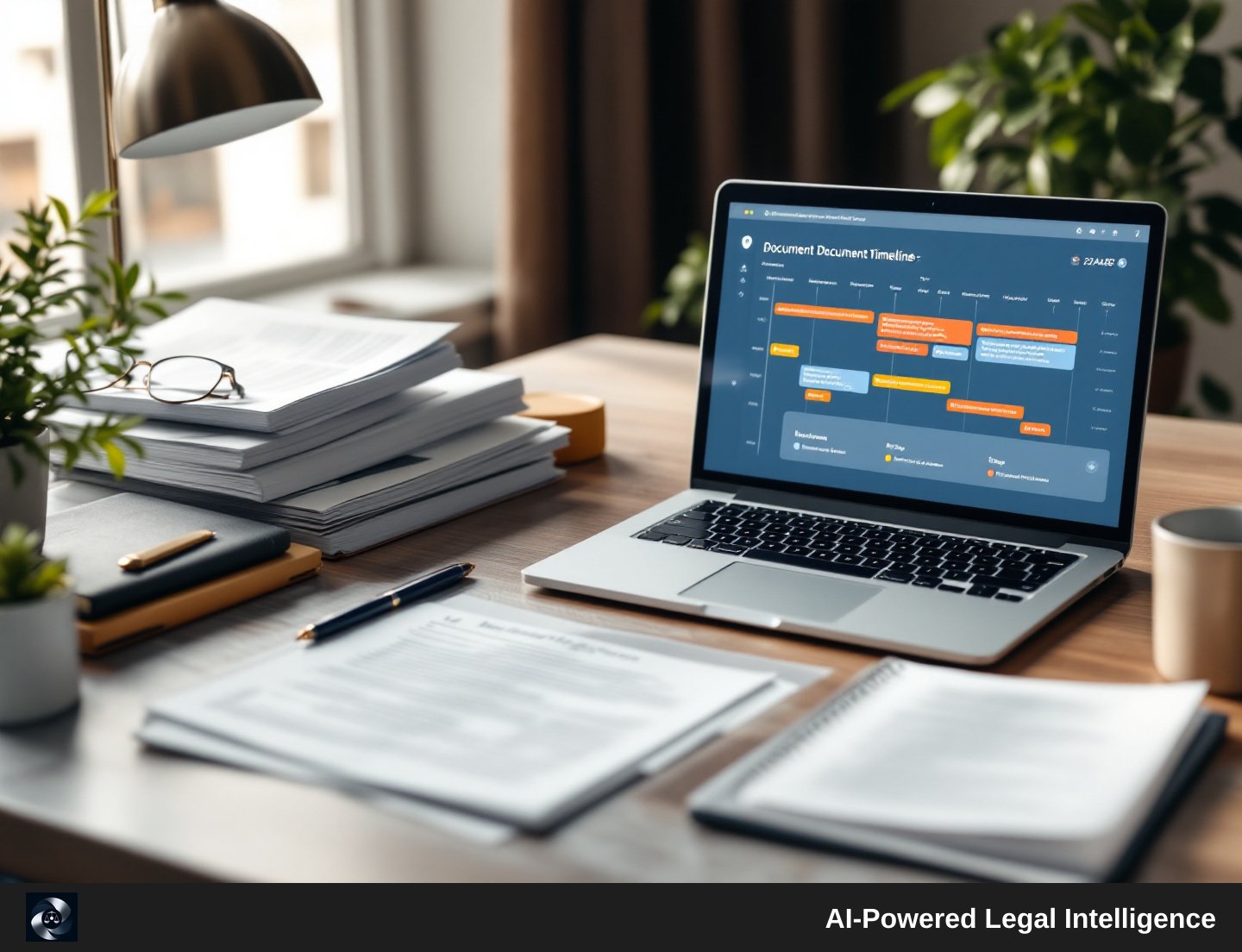
From there, the AI builds a chronological, filterable case timeline drawn from all documents simultaneously. Every treatment date, every provider visit, every billing entry, and every key event in the liability record appears in a single view — with citations back to the source document and page number. You can filter by document type, date range, or keyword. If you want to see only the physical therapy notes between two dates, that is a two-second query, not a thirty-minute manual review.
This foundational organization is what makes everything downstream faster. The AI is not just finding documents — it is understanding their content well enough to place each entry in context.
Assembling the Medical Chronology and Special Damages Tally
The medical chronology is the evidentiary heart of most PI demand packages. It needs to show a clear, unbroken chain from the incident to the injury to the treatment to the damages. Adjusters and defense counsel look for gaps, inconsistencies, and pre-existing conditions that might complicate causation. Your chronology needs to anticipate those challenges.
AI platforms like ProvaLens generate itemized medical chronologies directly from the ingested records. The system reads treatment notes, extracts diagnoses and procedure codes, identifies the treating provider, and places each entry in date order — automatically. The output is a structured chronology that an attorney or paralegal can review, annotate, and finalize rather than build from scratch.
Special damages tallies work the same way. The platform reads billing statements and Explanation of Benefits documents, extracts line-item charges, and produces an itemized summary of medical expenses. This is the kind of work that typically requires a paralegal to open each billing document, manually enter figures into a spreadsheet, and check the math. Automated medical record review in PI law handles the extraction and organization; the attorney reviews and signs off.
One practical note: the AI draft is a starting point, not a finished product. Attorney review and finalization are essential — both for accuracy and because the demand letter itself requires professional judgment about framing, tone, and strategy. The AI accelerates the assembly; the attorney completes it.
Possible-Conflict Flagging: Catching Problems Before the Adjuster Does
One of the most valuable — and underappreciated — capabilities of AI document intelligence is automatic possible-conflict flagging. This is where the technology moves beyond simple organization into genuine analytical work.
Consider a scenario that plays out regularly in PI practice: a client tells their treating physician they have no prior history of back pain, but a records request reveals a chiropractic visit for lower back complaints eighteen months before the accident. Or a client's recorded statement to the adjuster describes the accident one way, but their deposition testimony describes it differently. These inconsistencies do not always surface until the defense raises them — often at the worst possible moment.
AI platforms that read the entire case file simultaneously can flag these contradictions automatically. The system compares statements across documents and surfaces conflicts with citations to the specific pages where the inconsistency appears. This gives the attorney the opportunity to address the issue proactively — by gathering additional context, preparing an explanation, or adjusting the framing of the demand — rather than being caught off guard.
For demand package purposes, the practical benefit is straightforward: you send a cleaner package, with fewer vulnerabilities, because the AI caught the problems first.
From AI Analysis to Demand Letter Draft
Once the medical chronology, special damages tally, and liability narrative are assembled, the AI can generate a demand letter draft that incorporates all of this material. The draft draws directly from the case file — citing specific records, specific billing amounts, and specific treatment dates — rather than relying on the attorney to manually weave those details into the letter.
This draft is not a finished demand letter. It requires attorney review, professional judgment about settlement value, and finalization. But it gives the attorney a substantive starting point that reflects the actual record, rather than a blank page or a generic template that needs to be populated from scratch.
For firms handling a high volume of cases, this matters enormously. A demand package that used to take two days of paralegal time can move through the system significantly faster when the AI handles the assembly and the paralegal focuses on review and quality control. The attorney's time is concentrated where it adds the most value: strategy, negotiation, and client communication.
Expert Services: When You Need Done-for-You Case Analysis
For firms that want the benefits of AI-powered case analysis without the internal implementation, ProvaLens offers Expert Services — a done-for-you option where the ProvaLens team performs the AI case analysis and delivers interactive timelines, medical chronologies, and strategic observations directly to the firm. Pricing is per case; contact ProvaLens directly for current rates.
This is a genuine out-of-pocket case cost, similar in nature to an expert witness fee or an eDiscovery vendor charge. Because it is a per-case expense directly tied to the client's matter, a firm may — after appropriate client disclosure and informed consent — bill it to the client as a case expense, at cost, without markup. Firms should consult their own professional responsibility guidance and ensure the expense is disclosed appropriately before passing it through.
This option is particularly useful for high-value or complex cases where the demand package needs to be especially thorough, or for firms that are evaluating AI-powered analysis before committing to a full platform subscription.
Putting It All Together: A Faster, More Defensible Demand Package
The goal of AI-powered demand package preparation is not to replace attorney judgment — it is to eliminate the manual, time-consuming work that precedes that judgment. When the AI has already read every record, built the chronology, tallied the damages, and flagged the inconsistencies, the attorney can focus on what actually requires a lawyer: evaluating the strength of the claim, anticipating defense arguments, and making strategic decisions about how to frame the demand.
For small PI and employment law firms competing against larger practices with more resources, this kind of efficiency is a genuine differentiator. It means more cases handled with the same team, faster turnaround on demand packages, and a more thorough review process — because the AI catches things that manual review under time pressure sometimes misses.
If your firm is still building demand packages entirely by hand, now is a good time to see what AI document intelligence can do for your throughput. Start your free ProvaLens trial and see how much faster your next demand package comes together.