For a small personal injury firm, the medical record is everything. It is the backbone of causation arguments, the foundation of damages calculations, and — all too often — the source of case-breaking contradictions that opposing counsel will exploit without mercy. Yet for most two-to-eight attorney practices, the process of reviewing, organizing, and cross-referencing hundreds or thousands of pages of medical documentation still happens the old-fashioned way: a paralegal, a highlighter, and an ever-growing stack of PDFs.
That reality is changing. AI-powered medical record analysis software for law firms is moving from novelty to necessity, enabling small practices to do in hours what once took days — and to surface inconsistencies that can be difficult for human reviewers to catch when working through large, disorganized record sets. This post explores how automated medical record analysis works in practice, why possible-conflict flagging and timeline building are the two capabilities that matter most, and what a modern AI-assisted workflow actually looks like for a personal injury team.
Why Medical Records Are the Hardest Part of a Personal Injury Case
Ask any experienced personal injury attorney what consumes the most paralegal time on a case and the answer is almost always the same: medical records. A moderately complex motor vehicle accident case might involve records from an emergency department, a primary care physician, an orthopedic specialist, a physical therapist, a chiropractor, a neurologist, and a radiologist — each using different terminology, different date formats, different narrative styles, and different levels of legibility.
The challenges compound quickly:
Volume. A single hospitalization can generate hundreds of pages of nursing notes, physician orders, lab results, and imaging reports. Add pre-existing condition records, and a case file can easily exceed a thousand pages before liability documents are even considered.
Format inconsistency. Some records arrive as clean, text-based PDFs. Others are scanned handwritten notes or faxed documents that require optical character recognition before they are even searchable. Many arrive as a disorganized mix of both.
Chronological complexity. Treatment rarely follows a clean linear path. Patients see multiple providers, sometimes simultaneously, sometimes with gaps. Reconstructing a coherent treatment timeline from records that arrive in no particular order — and that reference each other inconsistently — is genuinely difficult work.
Hidden contradictions. A discharge summary may describe the patient as ambulatory and independent. A physical therapy intake note from the same week may document the patient requiring a walker. Neither document is necessarily wrong, but the apparent inconsistency will be used by defense counsel if it is not identified and addressed proactively.
These are not minor inconveniences. They are the structural reasons why medical record review is slow, expensive, and error-prone when done manually — and why medical record automation for legal cases has become one of the most consequential technology investments a personal injury firm can make.
What Automated Medical Record Analysis Actually Does
The phrase "automated medical record analysis" can mean different things depending on the vendor and the use case. In the context of a platform like ProvaLens, it refers to a specific set of document intelligence capabilities designed for the legal workflow — not the clinical one.
Automatic Document Classification and Organization
When records are uploaded to ProvaLens, the platform automatically classifies them by document type — medical records, billing statements, imaging reports, police reports, and so on. This eliminates the manual sorting step that often consumes hours of paralegal time at case intake. Documents are organized and searchable from the moment they enter the system.
For scanned or handwritten records, OCR is applied automatically, converting image-based pages into searchable text. This means a faxed handwritten progress note from a chiropractor is just as searchable as a typed hospital discharge summary — a capability that sounds simple but has enormous practical value when you need to find every mention of a specific symptom or date across a thousand-page file.
Chronological Timeline Construction
One of the most time-intensive tasks in medical record review is building the treatment timeline — a chronological account of every clinical encounter, diagnosis, procedure, and prescription. Done manually, this is painstaking work. Done with AI medical record review for personal injury cases, it happens automatically.
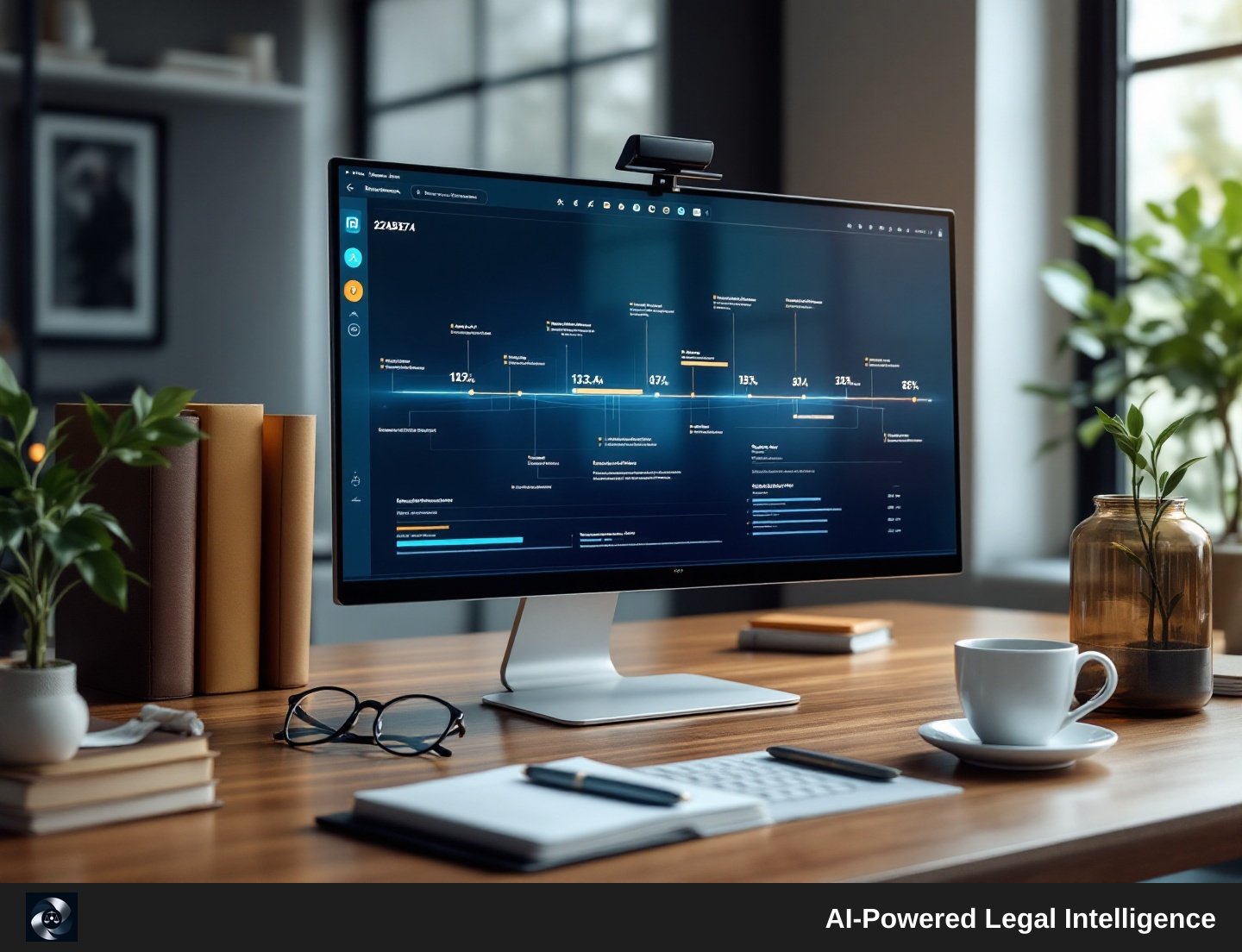
ProvaLens extracts dates and events from uploaded documents and assembles them into a chronological case timeline. Attorneys and paralegals can see, at a glance, the sequence of treatment — when the client first presented after the incident, how treatment progressed, where there were gaps, and how the clinical picture evolved over time. These timelines can be exported to PDF for use in demand packages, mediations, or trial preparation.
The value here is not just efficiency. A well-constructed medical timeline tells the story of your client's injury in a way that is immediately comprehensible to an adjuster, a mediator, or a jury. It transforms a pile of records into a coherent narrative — and it does so with citations to the underlying source documents, so every event on the timeline is verifiable.
Possible-Conflict Flagging Across the Full Record Set
This is where AI medical record review for personal injury cases delivers its most distinctive value. ProvaLens flags contradictions and inconsistencies across documents — not just within a single record, but across the entire uploaded case file.
To illustrate how this might work in practice (hypothetical example): a client claims the accident caused a new onset of lower back pain. The treating orthopedist's records support this. But a pre-litigation physical examination report from an employer-mandated occupational health visit — uploaded as part of a broader records request — notes chronic lower back complaints predating the accident by eighteen months. ProvaLens surfaces that inconsistency. Your team can then address it proactively in the demand letter, rather than being blindsided by it in discovery.
Or consider this hypothetical reverse scenario: defense counsel's IME report characterizes the client's complaints as inconsistent with the objective findings. But three separate treating providers documented the same subjective complaints in nearly identical terms across a nine-month period. ProvaLens identifies that pattern — the consistent documentation that undermines the defense narrative — and surfaces it for your team to review.
Possible-conflict flagging is not about finding problems to hide. It is about knowing your case fully before the other side does.
The Practical Workflow: From Intake to Demand
Understanding how these capabilities fit together in an actual case workflow helps clarify the real-world value of medical review software for personal injury practices.
At intake: Records are uploaded or imported directly from connected cloud storage (OneDrive, SharePoint, Google Drive, Dropbox) or from Clio and MyCase matters. ProvaLens classifies and OCRs everything automatically. The team starts with an organized, searchable file rather than a chaotic inbox of attachments.
During review: Paralegals use the AI chat feature to ask plain-English questions about the record set — "What did the treating neurologist say about causation?" or "Are there any mentions of prior back injuries?" — and receive answers with citations to exact page and paragraph. The feature searches across the full record set and returns cited results; as with any AI tool, attorneys should verify answers against the underlying source documents before relying on them.
Before demand: The team exports a chronological timeline and reviews the contradiction flags. Any inconsistencies that need to be addressed — or that can be used offensively — are identified before the demand letter is drafted. The timeline itself may be included in the demand package as an exhibit.
At mediation or trial: The exported timeline and supporting documentation provide a clear, credible narrative that is easy for a mediator or jury to follow. Every event is sourced; nothing is asserted without a citation.
Expert Services: When You Want It Done For You
Not every firm wants to run the analysis themselves. For practices that prefer a fully managed approach, ProvaLens offers Expert Services — a done-for-you AI case analysis starting at $3,500 per case. The deliverable includes an interactive timeline, a medical chronology, and a detailed summary of flagged contradictions and document patterns drawn from the uploaded record set.
Because Expert Services is a discrete, per-case engagement — similar in structure to hiring a medical expert or retaining an eDiscovery vendor — it represents a genuine out-of-pocket case cost. Whether and how that cost may be passed through to a client as a case expense is a question governed by your jurisdiction's professional responsibility rules and your engagement agreement; firms should consult those rules and obtain appropriate client disclosure and informed consent before doing so. This is meaningfully different from the monthly platform subscription, which is a firm overhead cost and not a per-client pass-through.
For high-value cases where the cost of a missed contradiction or an unorganized record set could translate into significant attorney time and rework, the economics of Expert Services are worth evaluating carefully.
Building a Competitive Advantage Through Better Medical Analysis
The firms that will define personal injury practice in the coming years are not necessarily the largest ones. They are the ones that use their resources most intelligently — that leverage medical record analysis software for law firms to handle volume without proportionally increasing headcount, that flag inconsistencies earlier in the review process, and that present their clients' cases with a clarity and organization that reflects well on the firm's preparation.
AI-powered document intelligence gives smaller practices access to analytical depth that was previously available only to firms with the budget to staff large case review teams. When a two-attorney personal injury practice can produce a fully sourced, chronologically organized medical timeline and a comprehensive contradiction analysis within days of receiving records, that is a meaningful operational advantage — one that frees attorney judgment to focus on strategy rather than document logistics.
The technology is not a replacement for attorney judgment. It is the infrastructure that makes attorney judgment faster, better-informed, and more defensible. If your practice is still relying on manual review to manage complex medical record sets, now is a good time to see what a different approach looks like — Start your free ProvaLens trial.